First Cruise Ship Breaks Through Strait of Hormuz After Weeks of War Closure
A major breakthrough for the global cruise industry unfolded today as the first cruise ship successfully transited the Strait of Hormuz since the outbreak of conflict in the Middle East earlier this year.
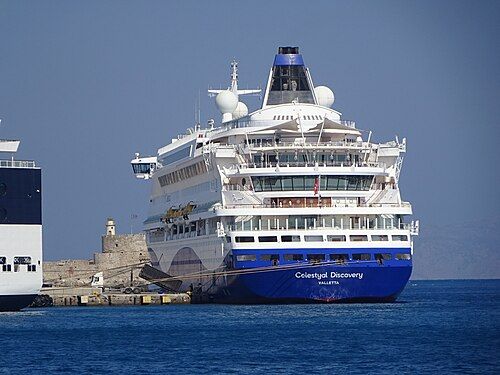
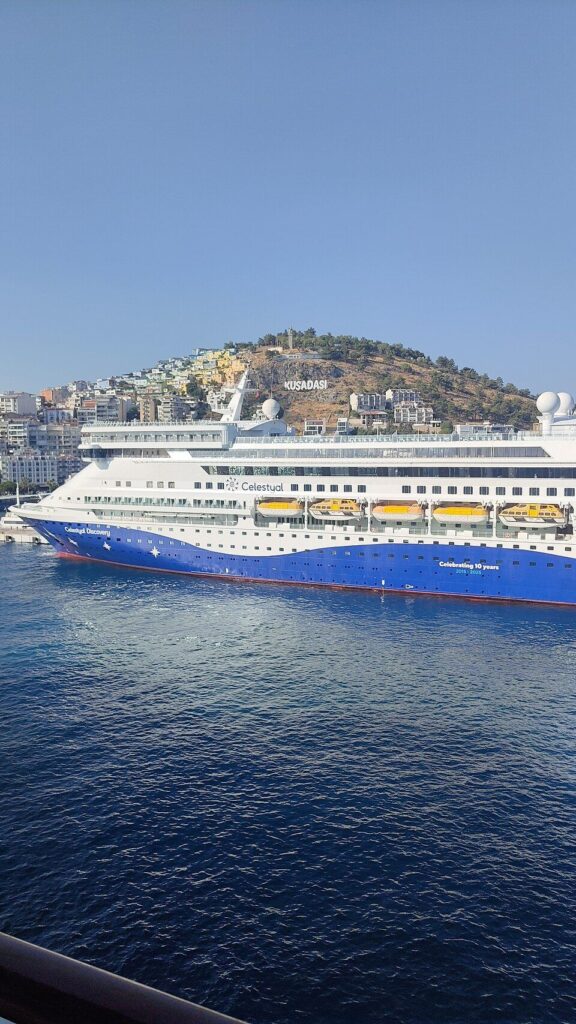
The Malta-flagged Celestyal Discovery, operated by Celestyal Cruises, departed Dubai on April 17, 2026, marking the reopening of one of the world’s most critical maritime corridors after nearly two months of disruption.
A Long-Awaited Passage
According to vessel tracking data, Celestyal Discovery left Port Rashid in Dubai at approximately 11:36 a.m. local time, setting course for Muscat, Oman, where it is expected to arrive on April 18.
Notably, the ship is believed to be sailing without passengers, underscoring that this voyage is primarily operational — a repositioning effort following weeks of enforced inactivity.
The vessel had remained docked for 47 days, unable to leave due to escalating tensions and restrictions in the region.
Strait Reopens After Weeks of Closure
The transit comes just hours after officials from Iran and the United States confirmed that the Strait of Hormuz is now open to commercial traffic for the duration of a ceasefire agreement.
The waterway had effectively been closed since late February, when military escalation involving Iran, the United States, and Israel led to severe security risks. On February 28, Iranian forces warned ships not to pass through the strait, halting most maritime movement.
At one point, around 2,000 vessels were stranded across the Persian Gulf region.
Statements from Donald Trump indicated that while the route is now “completely open,” certain naval measures remain in place, including a blockade targeting Iranian ports.
Cruise Industry Disruption
The closure had a significant ripple effect on the cruise sector, particularly for ships operating Middle East itineraries.
Celestyal Discovery had been sailing its “Iconic Arabia” program, visiting ports such as Dubai, Abu Dhabi, Doha, and Khasab when the crisis began. Its sister ship, Celestyal Journey, remains docked in Doha awaiting clearance to depart.
Other major cruise lines were also impacted:
- MSC Cruises had ships like MSC Euribia stranded in Dubai, forcing multiple cancellations.
- TUI Cruises saw Mein Schiff 4 and Mein Schiff 5 halted in regional ports.
Cruise lines were compelled to cancel sailings, delay repositioning voyages, and suspend entire deployment schedules as ships could not exit the Gulf.
What Happens Next?
The successful passage of Celestyal Discovery is being closely watched as a test case for the safe reopening of the route.
If conditions remain stable:
- Additional cruise ships may begin departing the Gulf in the coming days.
- Repositioning voyages toward Europe — critical for the summer season — could resume.
- Cruise lines may gradually restore normal operations after months of disruption.
However, uncertainty remains. Any further movement will depend on security assurances and navigation protocols set by regional authorities.
A Turning Point for Cruise Travel
While this voyage carried no passengers, its symbolic importance is significant. The transit of Celestyal Discovery represents the first concrete step toward recovery for cruise operations in the region.
For an industry heavily reliant on precise scheduling and seasonal deployment, the reopening of the Strait of Hormuz could mark the beginning of a long-awaited return to normalcy — provided stability holds in one of the world’s most strategically vital waterways.
More updates are expected as additional ships attempt to follow.