Drunk Cruise Captain Caught at Police Checkpoint With Passengers on Board
A routine police inspection on a busy Belgian waterway just uncovered something that nobody on those 106 passenger cabins was aware of — the person steering their ship had been drinking.
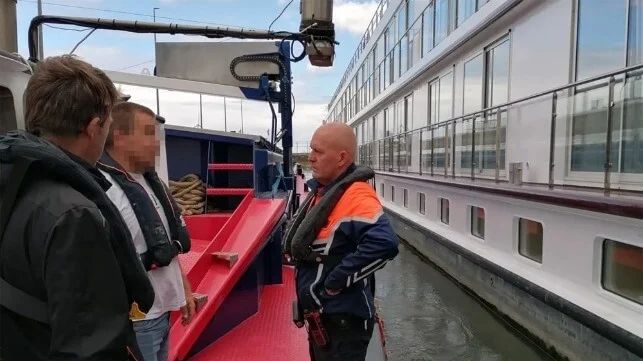
Belgian and Dutch authorities conducted a joint checkpoint operation near the Albert Canal, the busy commercial waterway connecting Antwerp with inland destinations across Belgium and the Netherlands. Officers stopped ten vessels in total — nine commercial ships and one river cruise ship — checking for operational compliance, waste management certifications, and conducting breathalyzer tests on all active crew members.
Eight of the nine commercial ships passed. One river cruise ship did not.
The captain of the Swiss-owned vessel, which was carrying 106 passengers on a sailing from Antwerp to Maastricht, tested above the legal blood alcohol limit. Belgian authorities were direct about what their findings showed: “This man had drunk a little too much.”
His boating license was immediately revoked on the spot. He was relieved of command and a sober officer on board assumed control of the vessel, which was permitted to continue its journey. Beyond the license suspension, the captain is expected to face a fine from the Flemish Waterway authorities.
Which Ship Was It?
The vessel has not been officially named by authorities, identified only as Swiss-owned and traveling from Antwerp to Maastricht at the time of the checkpoint. Cruise tracking data for early June shows Swiss-based river cruise operators active in the region — including the possibility that the vessel may have been operated by Viking River Cruises, one of the largest river cruise operators on European waterways, though this has not been confirmed.
Viking Kvasir is registered in Basel, Switzerland, and is documented as having sailed from Antwerp to Maastricht around the time in question as part of a nine-night sailing toward Amsterdam. Viking has not publicly commented on the incident.
The Rules Are Clear — and the Stakes Are High
For context on just how serious this is: in Belgium, the legal blood alcohol limit for professional vessel operators is significantly stricter than for regular drivers — 0.2 g/l in the blood or 0.09 mg/l of exhaled breath, compared to 0.5 g/l for the general public. The captain exceeded even the more lenient general limit.
A cruise ship captain holds the highest authority aboard any vessel. They are responsible for the safety of every passenger and crew member on board, and are required to be capable of responding immediately and effectively to any emergency — from mechanical failure to medical crisis to collision. That responsibility does not pause while the ship is underway on a calm river section. It exists at all times.
Mainstream ocean cruise lines typically enforce a blood alcohol limit of 0.04% for crew — roughly equivalent to one standard drink for an average adult — and require a multi-hour abstention window before any shift begins. Violation is generally considered grounds for immediate termination.
On a river cruise ship carrying over 100 passengers through a busy commercial waterway shared with cargo vessels, barges, and other traffic, those rules exist for a reason.
What Happened to the Passengers
Critically, the 106 passengers aboard were not endangered by the discovery. The sober officer who assumed command was qualified, the vessel was operating safely, and the journey continued without incident after the captain was removed.
But the question that passengers on river cruise ships everywhere will be asking after this story breaks is a simple and uncomfortable one — how often does this happen without a checkpoint in place to find it?