Egypt Denies Entry to LGBTQ+ Cruise Ship Just Days After Turkey Turned It Away
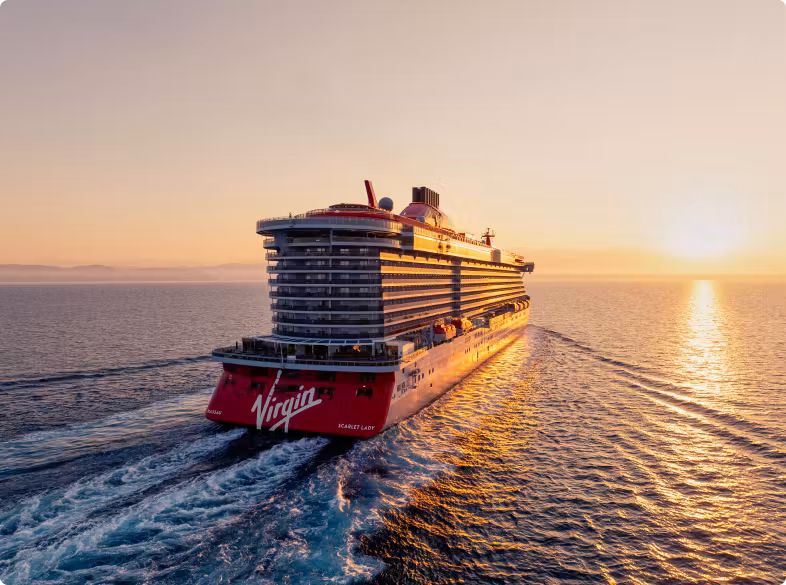
When we last reported on the Scarlet Lady, Turkey had just become the first country in Atlantis Events’ 36-year history to bar one of its charter sailings from docking. The story was shocking. Then Egypt did the same thing.
Passengers aboard Virgin Voyages’ Scarlet Lady woke on the morning of July 9, 2026, to find a letter slipped under their cabin doors. Egypt had denied the ship entry into its waters. The scheduled call in Alexandria — a replacement port added only after Turkey’s ban forced an emergency itinerary change just days earlier — was cancelled. No explanation was given.
In the space of one week, the same cruise ship carrying nearly 2,000 LGBTQ+ passengers and Broadway performer Patti LuPone had been turned away by two separate countries.
Four Hours From the Harbor
The timing of Egypt’s decision made it particularly jarring. Unlike Turkey, which gave advance notice of its ban, Egyptian authorities waited until the ship was nearly at the door.
“We were given full approval to arrive in Egypt and just four hours before we picked up the pilot and customs officers we were told that the ship would not be allowed to enter the harbor,” Rich Campbell, president and CEO of Atlantis Events, told USA TODAY. “No explanation was given for this decision and we are very disappointed.”
Passengers who had been up since 6 a.m. preparing for what many had described as the most anticipated day of the voyage — with private tours to the pyramids and museums already booked and paid for — were told the ship was rerouting again.
Unlike Turkey, which publicly justified its decision by citing moral standards and publishing a formal government statement, Egyptian authorities have issued no public comment and have not responded to media requests for explanation.
A History With No Problems
What makes Egypt’s decision particularly striking is the context of the prior relationship. Campbell told USA TODAY that Atlantis has visited Egypt at least five times previously without incident. In 2025, the company brought 2,500 guests to Alexandria. The year before, 1,200 passengers visited without issue. The Scarlet Lady had specifically been rerouted to Alexandria after Turkey’s ban because it was a destination the company believed it could reach without difficulty, based on that unbroken track record.
That track record now has a very visible break in it.
“We successfully sailed a similar itinerary last year without issue,” Campbell wrote in the letter to passengers. “So we were surprised by this unfortunate decision. Please know that both the Atlantis and Virgin Voyages teams worked tirelessly to make this call in Alexandria a possibility. This news came as a surprise to all of us, and we’re just as disappointed as you are.”
All shore excursions pre-booked through the cruise for the Alexandria port call were automatically cancelled and refunded to guests’ onboard accounts.
The Revised Itinerary — Again
With Alexandria removed, Atlantis Events and Virgin Voyages have rerouted the Scarlet Lady for the second time in a week. The ship will now call at Chania, Crete, on July 10, followed by Kotor, Montenegro. Stops in Dubrovnik and Zadar, Croatia remain on the schedule as originally planned. A scheduled call in Heraklion, Crete the day after Chania has been replaced with a sea day.
Did Turkey Open a Door?
The question now being asked openly within the LGBTQ+ travel community is whether Turkey’s decision functioned as a signal to other countries — a demonstration that blocking an LGBTQ+ charter cruise carries no meaningful diplomatic or economic consequence.
Kyle Olsen, owner of LGBTQ+ tour company Hermes Holidays, told The Guardian he believes Egypt would not have acted if Turkey had not moved first. “I worry that other countries are going to be emboldened in turn to ban gay cruises from their ports as well,” he said.
Olsen was careful to distinguish between government decisions and the attitudes of ordinary people in those countries. “It’s important to note that the views of the government are not necessarily reflective of the views of the peoples of those countries,” he said. “We’ve been to Turkey and Egypt many times in the past and have found the people very warm, friendly and engaging.”
One passenger on board put the situation in starker terms. Writing on his blog, he noted that in the company’s 36-year history, Atlantis had never had a ship denied entry to dock — and now it had happened in two countries in the same week. “Trust and believe, me and my fellow passengers will be fine: if they don’t want our tourism, we will sparkle and spend elsewhere.”
Patti LuPone, Still Performing
Through both bans, the ship has continued sailing, and Patti LuPone has continued performing. The 77-year-old Tony Award winner had already responded publicly to Turkey’s decision in an Instagram post, calling it an outrage and expressing her fury while making clear she would honor her commitment to the passengers aboard.
Nothing in the public record suggests she has wavered from that position as Egypt’s decision arrived.
Where This Goes Next
The Scarlet Lady’s voyage continues with an adjusted itinerary, and the passengers aboard are reportedly making the best of a situation that has taken away two significant destinations from a 10-night sailing they paid considerable amounts of money for.
The broader implications, however, extend well beyond this single cruise. Campbell’s concern — that countries are beginning to believe they can selectively exclude tourists based on identity without consequence — is now supported by two data points in the same week. Whether the international travel industry, cruise lines, or governments respond meaningfully to that precedent is a question that will outlast this particular voyage.
For now, the Scarlet Lady sails on toward Crete.