MSC Cruises Is Adding 10 New Ships by 2033 — Including a Brand New Class Nobody Saw Coming
MSC Cruises is the world’s largest privately owned cruise line. It operates 24 ships across eight distinct classes. It has two of the biggest ships ever built in active service right now. And despite all of that, it just announced something the industry hadn’t seen coming — a brand new class of ships that is deliberately, strategically, and meaningfully smaller than its current flagships.
The New Frontier class is not just another round of newbuilds. It represents a philosophical shift in how MSC is thinking about the next decade of cruising — who it wants to attract, where it wants to sail, and what kind of experience it wants to deliver.
Understanding why requires understanding where MSC has come from, where it is right now, and where the New Frontier fits into the biggest fleet expansion plan in the cruise industry today.
This is everything we know…
Who Is MSC Cruises and Why Does This Announcement Matter?
Twenty-four ships. Eight classes. A private island in the Bahamas. A flagship that holds the title of world’s largest cruise ship by gross tonnage. A brand new Alaska season. And somewhere between six and ten more ships on order depending on how many options get exercised.
MSC Cruises has been on one of the most relentless expansion trajectories in the history of the cruise industry — and it shows no signs of letting up.
What started as a modest European operation in 1988 has become the world’s largest cruise line, and in recent years MSC has set its sights firmly on North America. Miami. Port Canaveral. Galveston. New York. Seattle. The line that most American cruisers had barely heard of a decade ago now competes directly with Carnival and Royal Caribbean for the same passengers in the same ports.
But the New Frontier announcement signals something more interesting than just another round of newbuilds. For the first time, MSC isn’t simply ordering more of what it already has. It’s ordering something deliberately, strategically different — and that difference tells you a lot about where the world’s biggest cruise line thinks the industry is going next.
The Current MSC Fleet — Eight Classes, 24 Ships
To understand where the New Frontier fits, you need to understand what MSC already operates. The fleet spans eight distinct classes, each representing a different generation of thinking about what a cruise ship should be.
The Lirica Class (2001–2004)
Ships: MSC Armonia, MSC Sinfonia, MSC Opera, MSC Lirica
Size: Approximately 65,542 gross tons | Capacity: ~1,566 guests
The oldest ships in the active MSC fleet and the ones that started it all. Small by modern standards, the Lirica class ships operate where their size is actually an advantage — ports that larger vessels simply cannot access. MSC Armonia and her sisters visit smaller Mediterranean harbors, less-visited Caribbean islands, and destinations that have been closed to the mega-ship era entirely.
Their age means they lack many of the features newer vessels offer, but their intimate scale and itinerary flexibility give them a devoted following among experienced cruisers who have already done the standard routes many times.
The Musica Class (2006–2010)
Ships: MSC Musica, MSC Orchestra, MSC Poesia, MSC Magnifica
Size: Approximately 92,409 gross tons | Capacity: ~3,013 guests
The second generation of MSC’s fleet brought meaningful scale increases and a noticeably more refined onboard atmosphere. The Musica class ships are known for their elegant European interior design — Swarovski crystal staircases feature prominently — and a refined, quieter atmosphere compared to the entertainment-heavy megaships that came after.
MSC Poesia made headlines in 2026 as the ship deployed for MSC’s inaugural Alaska season from Seattle, demonstrating that mid-size vessels still have an important role to play even as the fleet’s average size has grown enormously.
The Fantasia Class (2008–2013)
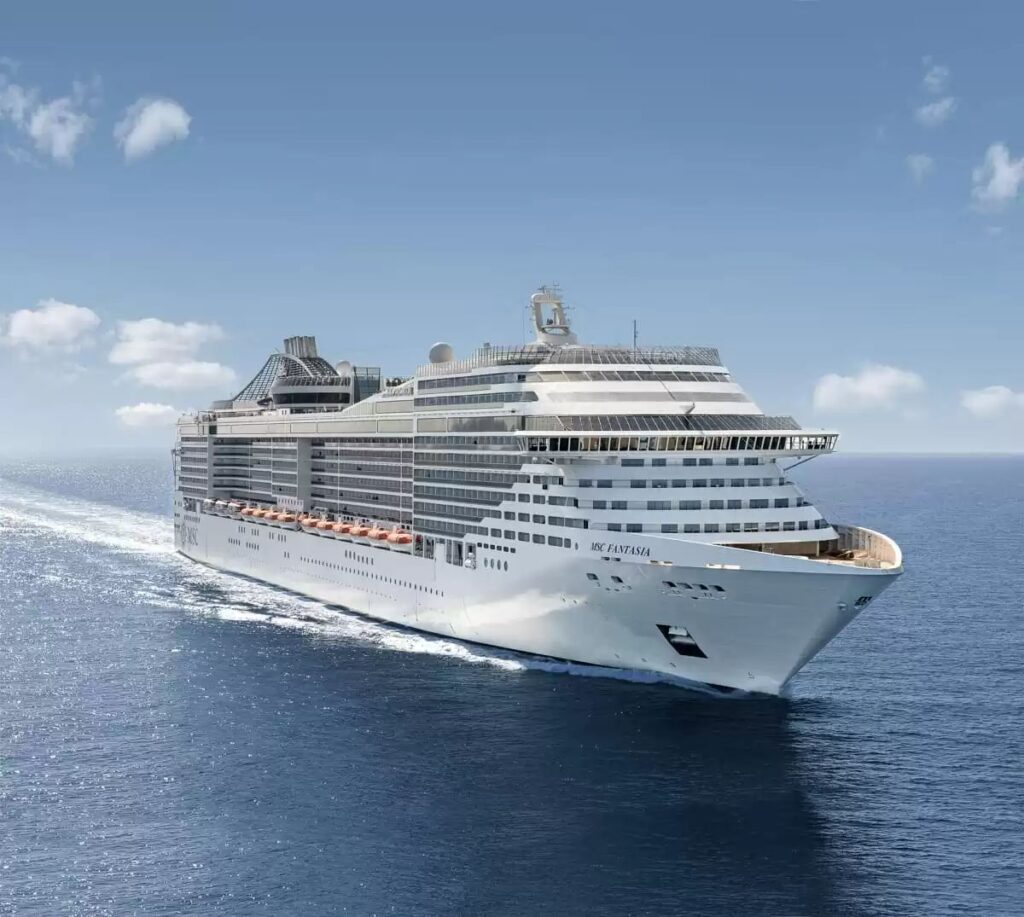
Ships: MSC Fantasia, MSC Splendida, MSC Divina, MSC Preziosa
Size: Approximately 137,936–139,072 gross tons | Capacity: ~3,274–3,959 guests
The Fantasia class was MSC’s first genuinely large-scale push — ships that could compete with the mainstream American lines on feature count and onboard variety. The class introduced the MSC Yacht Club, the exclusive ship-within-a-ship suite complex that has become one of MSC’s signature differentiators. The Yacht Club provides butler service, a private pool, private dining, and dedicated concierge access for guests in the highest cabin categories — a concept that has since been refined and expanded across the entire fleet. MSC Divina became one of the line’s most beloved ships after its North American debut in Miami and maintains a loyal following.
The Meraviglia Class (2017–2019)
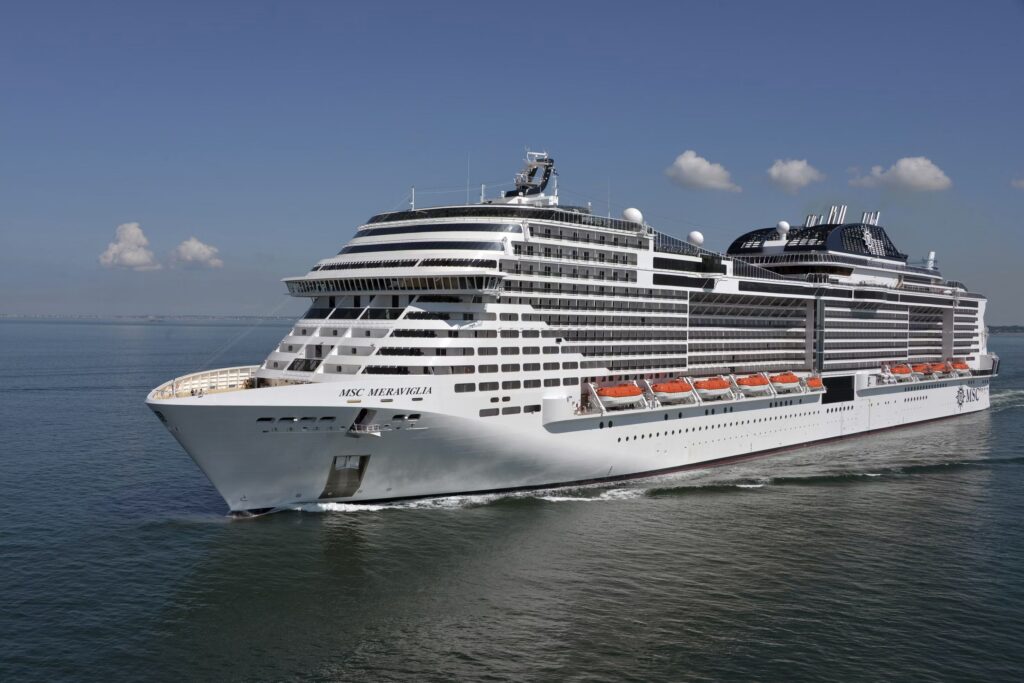
Ships: MSC Meraviglia, MSC Bellissima
Size: Approximately 171,598 gross tons | Capacity: ~4,428–5,714 guests
The Meraviglia class marked MSC’s decisive leap into the mega-ship era and introduced two design innovations that became defining features of the line’s identity.
The first was the 96-meter LED-domed indoor promenade — a street-level boulevard running the length of the ship beneath a curved ceiling displaying a constantly changing LED sky, creating an atmosphere that feels closer to an indoor city than a traditional cruise ship corridor.
The second was the introduction of Cirque du Soleil at Sea performances, bringing the Canadian entertainment company’s signature theatrical acrobatics to a dedicated purpose-built venue aboard the ship. MSC Meraviglia is currently one of the line’s primary North American workhorses, offering seven-night Bahamas and Florida itineraries from New York.
The Meraviglia Plus Class (2019–2023)
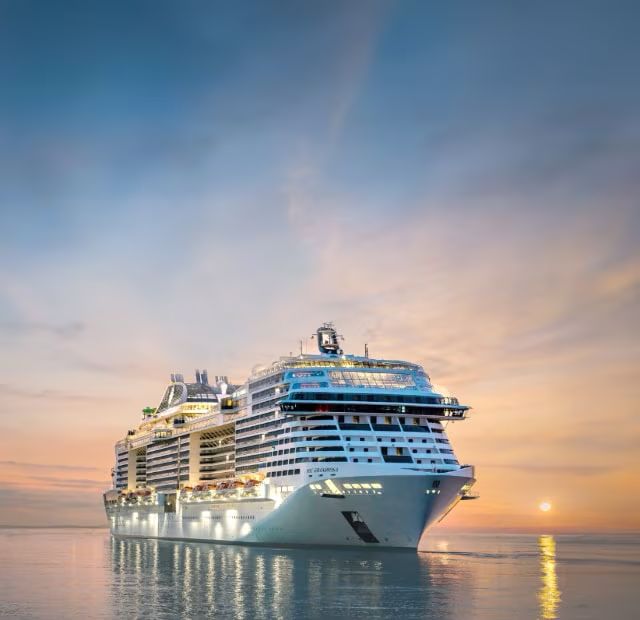
Ships: MSC Grandiosa, MSC Virtuosa, MSC Euribia
Size: Approximately 181,541 gross tons | Capacity: ~5,331–6,334 guests
The Meraviglia Plus ships take the core Meraviglia concept and expand it significantly — adding approximately 10,000 gross tons and a meaningfully larger interior promenade with more dining and retail options. The class is also notable for introducing some of the fleet’s most technologically ambitious features, including one of the first humanoid robotic bartenders deployed at sea.
MSC Euribia, the final ship of the class, famously completed a net-zero greenhouse gas emissions voyage from France to Denmark using bio-LNG — a landmark moment in the cruise industry’s slow transition toward cleaner fuel sources. Her hull features an enormous custom-painted mural of the ocean ecosystem, making her visually one of the most distinctive ships in the MSC fleet.
The Seaside Class (2017–2018) and Seaside EVO (2021–2022)
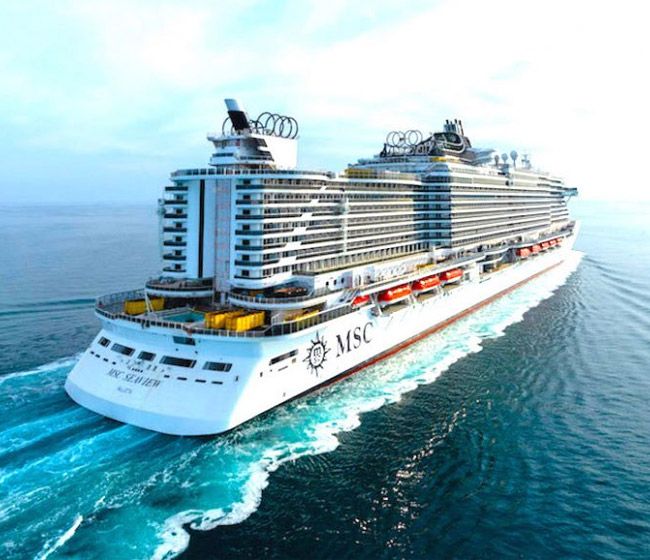
Ships: MSC Seaside, MSC Seaview (Seaside) | MSC Seashore, MSC Seascape (Seaside EVO)
Size: 153,516–170,412 gross tons | Capacity: ~4,132–5,646 guests
The Seaside class introduced a fundamentally different design philosophy to MSC’s fleet — what the line called a “beach condo” approach. Rather than focusing energy on enclosed interior spaces, the Seaside ships were built around outdoor living. Wide wraparound promenades, glass-floored walkways extending over the water, massive pool decks, and an emphasis on connection between ship and sea defined the concept. The Seaside EVO subclass — MSC Seashore and MSC Seascape — refined and expanded the concept.
MSC Seashore holds the distinction of featuring the largest pool deck in the fleet. MSC Seascape added Robotron, a suspended roller-coaster-style thrill ride on the top deck. Both ships are currently among MSC’s most active in the North American market.
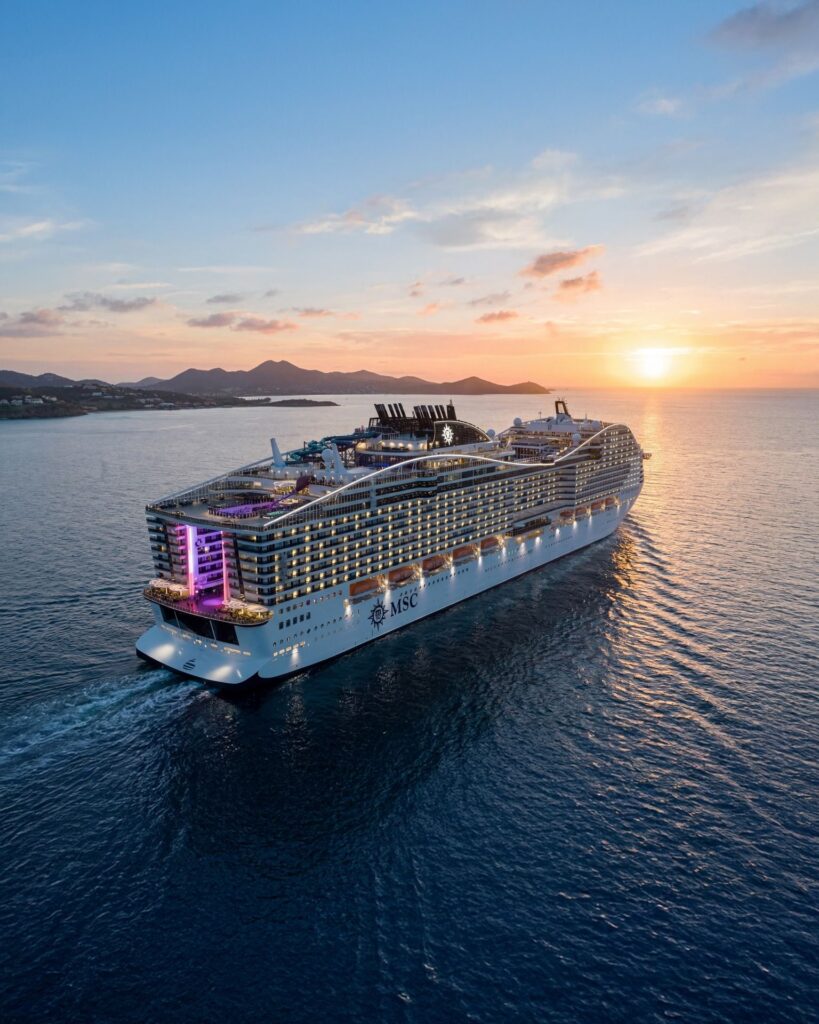
The World Class (2022–2030 planned)
Ships: MSC World Europa (2022), MSC World America (2026), MSC World Asia (2026), MSC World Atlantic (2027), plus four more confirmed
Size: Approximately 215,863–216,638 gross tons | Capacity: ~6,762 guests
This is where MSC has planted its flag as the operator of the world’s largest cruise ships. The World Class vessels — built by Chantiers de l’Atlantique in Saint-Nazaire, France — are LNG-powered mega-ships at 22 decks tall, carrying nearly 6,800 guests and 2,138 crew members. They are the second-largest cruise ships ever built by gross tonnage, trailing only Royal Caribbean’s Icon class and its successors.
MSC World Europa was the first, debuting in November 2022. MSC World America debuted in April 2026 in Miami, featuring the Cliffhanger swing ride extending 40 meters over the ocean from Deck 20. MSC World Asia debuts in December 2026 with its striking LED dragon installation. MSC World Atlantic arrives in 2027, sailing from Port Canaveral. Four more World Class ships are confirmed on order through 2030.
The New Frontier Class — Everything We Know
The Order
In December 2025, MSC Cruises announced a landmark agreement with Meyer Werft, the prestigious German shipbuilder based in Papenburg. The deal covers four confirmed new ships with options for two more — potentially six vessels in total.
xThis is the first time MSC and Meyer Werft have worked together. Meyer Werft CEO Dr. Bernd Eikens called the collaboration a “significant milestone” in the yard’s 230-year history.
Delivery Schedule
- Ship 1: Expected delivery 2030
- Ship 2: Expected delivery 2031
- Ship 3: Expected delivery 2032
- Ship 4: Expected delivery 2033
- Ships 5 and 6: Optional, unconfirmed delivery dates
No names have been announced for any New Frontier class vessel as of August 2026.
The Specifications
- Gross Tonnage: Approximately 180,000 GT per vessel
- Passenger Capacity: Up to 5,400 guests
- Shipyard: Meyer Werft, Papenburg, Germany
- Propulsion: Expected to incorporate next-generation environmental technology including hydrogen fuel cell systems — specific details not yet confirmed
How It Compares to the MSC Fleet
| Class | Gross Tonnage | Capacity | Shipyard |
|---|---|---|---|
| Lirica | ~65,542 GT | ~1,566 | Chantiers de l’Atlantique |
| Musica | ~92,409 GT | ~3,013 | Aker Yards |
| Fantasia | ~137,936–139,072 GT | ~3,274–3,959 | STX France |
| Meraviglia | ~171,598 GT | ~4,428–5,714 | Chantiers |
| Meraviglia Plus | ~181,541 GT | ~5,331–6,334 | Chantiers |
| Seaside | ~153,516 GT | ~4,132 | Fincantieri |
| Seaside EVO | ~170,412 GT | ~5,646 | Fincantieri |
| ★ New Frontier | ~180,000 GT | ~5,400 | Meyer Werft |
| World Class | ~215,863–216,638 GT | ~6,762 | Chantiers |
One number stands out: the space ratio. At 180,000 gross tons and 5,400 guests, the New Frontier ships have more space per passenger than any other class in the MSC fleet — including the flagship World Class vessels. That extra space can manifest as larger cabins, wider corridors, less crowded pool decks, or shorter queues at dining venues.
The Strategic Logic Behind a Smaller Ship
Port Access
The most immediately practical answer is ports. The World Class ships at over 215,000 gross tons cannot fit in a significant number of cruise destinations around the world. Draft restrictions, pier length limitations, and the simply impractical passenger volume that 6,762 guests descending on a small port town creates all combine to limit where a mega-ship can go.
At 180,000 gross tons the New Frontier ships are still genuinely large — large enough to deliver a full resort-caliber experience. But they are small enough to meaningfully expand the range of destinations MSC can offer to passengers who want more than the standard mega-ship circuit.
A Different Kind of Passenger
The cruise industry is changing demographically. Royal Caribbean’s Q2 2026 earnings report revealed that millennials and Generation Z passengers now account for 50% of all Royal Caribbean guests — a seismic shift. Younger cruise passengers often prioritize experience over scale. They want interesting itineraries, meaningful destinations, and the feeling that they are doing something different.
A ship that can access Kotor in Montenegro, Dubrovnik’s old city, Santorini’s restricted berth allocation, and the Norwegian fjords offers those passengers something the World Class ships fundamentally cannot.
Complementing Rather Than Competing
MSC is clearly building a two-tier fleet architecture for the 2030s. World Class ships will handle the highest-volume markets: Caribbean from Miami and Port Canaveral, major Mediterranean hubs, the routes where passenger numbers justify the largest possible vessel.
New Frontier ships will handle everything else — the more varied, flexible, experiential itineraries that require a different kind of ship.
The Environmental Dimension
MSC has publicly committed to net-zero greenhouse gas emissions by 2050. The New Frontier class has been described by MSC as incorporating “next-generation environmental technologies” as part of that commitment. One source indicates the class may incorporate hydrogen fuel cell systems as part of its propulsion architecture — which would make the New Frontier ships among the first cruise vessels to deploy hydrogen technology at commercial scale.
Meyer Werft’s track record with LNG propulsion and its experience with environmentally advanced vessel design — it built MSC Euribia, the fleet’s current green standard-bearer — makes the shipyard a logical partner for this ambition.
What We Don’t Know Yet
The honest picture of New Frontier knowledge requires acknowledging its significant gaps. As of August 2026:
- No ship names have been announced
- No renderings have been released
- No amenity details have been confirmed
- No deployment plans have been announced
- Propulsion specifics are unconfirmed
Substantive New Frontier announcements should begin appearing from late 2028 onward, roughly 18–24 months before the ship’s debut season.
The Complete MSC Newbuild Pipeline
Currently delivering or imminent:
- MSC World Asia — December 2026 debut
- MSC World Atlantic — 2027 debut from Port Canaveral
World Class confirmed on order (ships 5–8):
- MSC World ships 5, 6, 7, and 8 — delivering 2028–2030, built by Chantiers de l’Atlantique
New Frontier Class:
- Ship 1: 2030 | Ship 2: 2031 | Ship 3: 2032 | Ship 4: 2033
- Ships 5–6: Optional, unconfirmed
That is up to ten new ships arriving over the next seven years — on top of a 24-ship fleet that is already the world’s largest. The 60% capacity expansion figure MSC has cited is what the mathematics of this pipeline actually produces.
What It All Means for Cruisers
For anyone who sails with MSC, or who has been considering it, the New Frontier announcement has practical implications that extend well beyond abstract fleet statistics.
More ships in general means more itineraries, more departure dates, more competitive pricing, and more choice. But the specific nature of the New Frontier class offers something more targeted: the possibility of genuinely new and different cruise experiences from a line that has historically been associated with large-ship, major-port itineraries.
The New Frontier class will not be the largest ships MSC operates. They will not be the most technologically spectacular. But they may end up being the most interesting — because interesting, in cruising, is often determined less by how big a ship is and more by where it can go.