Carnival Cruise Line Hit by Major IT Breakdown, Triggering Fleetwide Delays
Carnival Cruise Line is dealing with widespread technology failures that have disrupted embarkation and debarkation operations across several ships, leading to long delays, late-night departures, and growing frustration among guests.
The issues surfaced during scheduled system maintenance and affected multiple core technologies used for guest processing. While Carnival has emphasized that passenger safety remained the top priority, the outages slowed boarding procedures, complicated debarkation, and disrupted onboard digital services that guests rely on heavily.
Multiple Ships Impacted Across the Fleet
On Monday, February 9, 2026, Carnival confirmed that technology issues were affecting embarkation and debarkation on multiple ships, including Carnival Breeze, Carnival Glory, and Carnival Freedom. Guests scheduled to board these ships were instructed to arrive at their cruise terminals two hours later than their originally assigned terminal arrival times, following notifications sent via email, text messages, and phone calls.
Carnival told guests that all passengers still needed to be onboard by 4:30 p.m. to allow ships to prepare for departure. At the time of the announcement, Carnival indicated that ports of call remained unchanged, though itinerary adjustments could become necessary if delays worsened.
The affected sailings include:
- Carnival Breeze: 5-night Western Caribbean cruise from Galveston to Cozumel and Progreso
- Carnival Glory: 4-night Bahamas cruise from Port Canaveral to Nassau and Celebration Key
- Carnival Freedom: 5-night Bahamas itinerary from Port Canaveral to Celebration Key, Nassau, and Half Moon Cay
These disruptions followed a similar delay experienced by Carnival Liberty on Sunday, February 8, when embarkation in New Orleans was delayed by approximately two hours.
Severe Delays and Overnight Departures
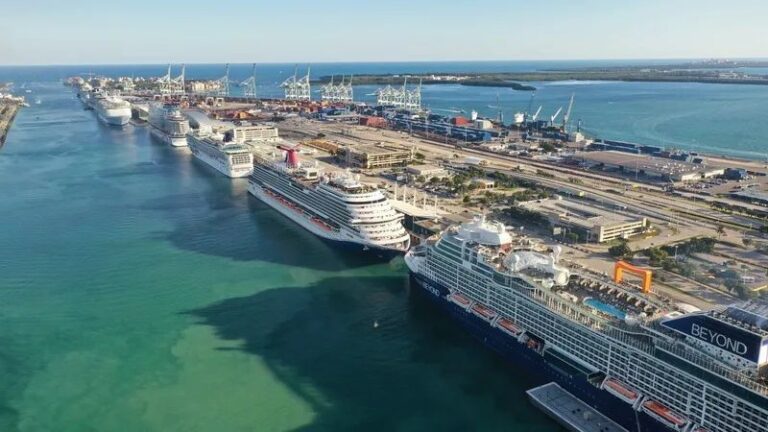
Earlier in the weekend, technology problems caused even more dramatic consequences at major cruise ports. At PortMiami, Carnival Celebration was scheduled to depart at 3:30 p.m. on February 8 but remained docked for hours due to system outages. The ship ultimately departed around 1:00 a.m., more than eight hours behind schedule, kicking off its seven-night Caribbean and Bahamas itinerary well after midnight.
Other ships, including Carnival Venezia, Carnival Pride, and Carnival Spirit, also experienced late-night departures, with some vessels not sailing until after midnight.
Carnival has not confirmed whether all affected itineraries will be adjusted to account for the delays, leaving some guests uncertain about potential impacts to port visits.
Debarkation Slowed by Manual Procedures
The technology outage also affected debarkation operations. Without functioning digital systems, crew members were required to conduct manual guest counts to confirm all passengers had left the ship. As a result, guests were asked to surrender their Sail & Sign cards instead of having them scanned and returned.
This disappointed many cruisers who view the cards as personal souvenirs, since each card typically includes details such as ship name, sailing date, dining time, and muster station. Carnival’s brand ambassador acknowledged the frustration but explained that cards could not be returned or reprinted due to security concerns.
Conflicting Messages on Safety Systems
Carnival initially stated that navigation and safety systems were not impacted by the IT failures. However, later comments from company representatives confirmed that some safety and navigation-related systems were affected, though Carnival stressed that all such systems were fully corrected before ships were permitted to depart.
The cruise line emphasized that no vessel sailed until safety systems were verified as fully operational.
HUB App and Onboard Technology Disruptions
In addition to embarkation delays, guests across multiple ships reported ongoing problems with the Carnival HUB app. The app, which is used for dining reservations, activity scheduling, excursion bookings, and onboard messaging, became unreliable or unusable for many guests during the outage.
As a workaround, Carnival made paper copies of the daily Fun Times schedule available onboard. While this helped guests stay informed about activities and entertainment, it did not replace key app-based functions such as mobile dining check-ins or guest messaging.
Despite the technical issues, Carnival noted that onboard dining, entertainment, and activities continued largely as scheduled once guests were onboard.
Not an Isolated Incident
The latest disruptions have renewed concerns about Carnival’s technology infrastructure. In December 2025, Carnival Firenze experienced a separate system failure that delayed its departure by more than 21 hours. While Carnival resolved that incident, the recurrence of large-scale outages has raised questions about system resilience as the cruise line continues to rely heavily on digital tools.
At the same time, Carnival has also faced unrelated operational challenges. Just days earlier, Carnival Sunshine experienced a weather-related delay returning to Norfolk after encountering rough conditions in the North Atlantic, arriving a full day later than planned. While weather is outside the cruise line’s control, the overlapping disruptions added to passenger anxiety.
Carnival Promises Improvements
Carnival has acknowledged the frustration caused by the delays and thanked guests for their patience. The cruise line says its IT teams are working to stabilize systems fleetwide and prevent future disruptions.
Looking ahead, Carnival has indicated it will prioritize improvements to its technology infrastructure, including upgrades to embarkation systems and enhancements to the HUB app. The company also plans to strengthen communication channels to ensure guests receive timely, clear updates when disruptions occur.
As the cruise industry continues its post-pandemic recovery, smooth embarkation and reliable onboard technology remain critical to guest satisfaction. For Carnival, the recent outages serve as a reminder that modern cruising depends not only on ships and destinations, but on resilient systems that can keep operations moving when issues arise.