Harvard Professor: “Anyone on That Ship Is High Risk.” Here’s What’s Happening to the Passengers Now.
What began as a mysterious illness aboard a remote expedition ship in the South Atlantic has become one of the most significant public health events of 2026 — and as of Tuesday morning, it has arrived on American soil.
Three people are dead. Seven cases have been laboratory confirmed. Passengers from 23 countries are scattered across medical facilities on multiple continents. And a question that nobody wanted to ask out loud is now being asked at the highest levels of global health: is the Andes strain of hantavirus spreading from person to person more easily than anyone previously understood?
Here is everything we know right now — and what happens next.
Where the Passengers Are Now
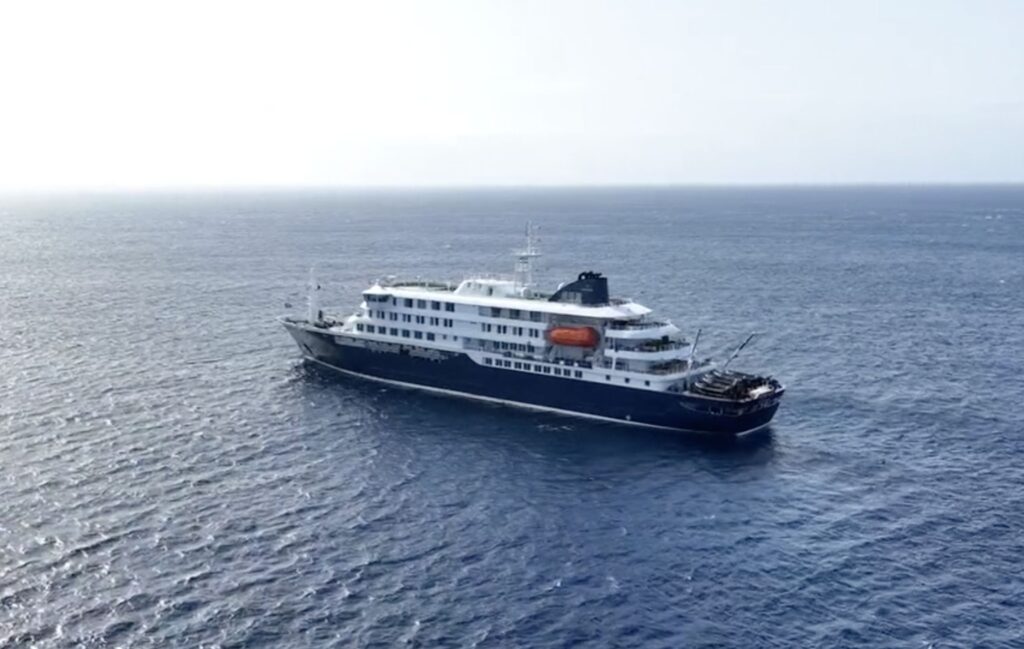
The MV Hondius, the expedition vessel at the center of the outbreak, has been evacuated. A total of 122 guests and crew have been repatriated to their home countries and to the Netherlands over the past several days. The ship itself departed Tenerife on Monday and is now en route to Rotterdam, where it is expected to arrive Sunday evening carrying just 27 people — 25 remaining crew members and 2 Dutch medical professionals. The body of a German passenger who died aboard the vessel on May 2 remains on board and will be repatriated upon arrival in the Netherlands.
In the United States, 18 people are currently being monitored at specialized medical facilities. Seventeen are American nationals and one is a British dual-national. Their ages range from the late twenties to the early eighties, with health officials noting that older passengers and those with underlying medical conditions face the highest risk of severe outcomes.
Sixteen of those individuals are at the University of Nebraska Medical Center — one of the few facilities in the country with a dedicated biocontainment unit capable of handling high-risk infectious disease patients. Fifteen of those sixteen are in the quarantine unit and remain asymptomatic. One has tested positive for hantavirus and is being cared for in the biocontainment unit itself.
The remaining two individuals have been transferred to Emory University in Atlanta, including at least one who is experiencing symptoms. Both are in a biocontainment unit there. The transfer was not a response to deteriorating conditions but rather a logistical decision — Nebraska’s biocontainment unit does not have enough capacity to house all passengers requiring that level of monitoring.
Beyond those 18, at least 11 additional individuals are under active health surveillance across seven American states — Arizona, California, Georgia, Texas, and Virginia among passengers who had previously disembarked from the ship, and New Jersey and Maryland among individuals who were exposed to a confirmed case during international flights.
The International Picture
The outbreak has now touched passengers from dozens of countries and the international response reflects that reach.
In South Africa, the British national who was the first confirmed hantavirus case — admitted to a Johannesburg hospital in critical condition weeks ago — is now described as clinically improving, though still ill.
In France, a woman who was among five French nationals evacuated from the ship tested positive upon returning from Tenerife after developing symptoms during her journey home. Her condition deteriorated overnight and she is currently in intensive care in stable condition, according to French Prime Minister Sébastien Lecornu.
In Spain, a passenger currently isolated in a Madrid hospital has returned a preliminary positive test, though he remains asymptomatic and his final results are pending. The other 13 Spanish passengers evacuated from the ship are testing negative.
Five Australians and one New Zealander are currently in the Netherlands following a delayed repatriation flight from Tenerife. Australia’s Health Minister Mark Butler confirmed they are expected to return home over the course of the week, after which they will enter a monitored quarantine facility in Perth for approximately three weeks before authorities determine the arrangements for the remainder of the 42-day monitoring period.
According to the World Health Organization, the total case count as of Tuesday stands at nine reported cases and seven laboratory-confirmed cases of hantavirus connected to the Hondius outbreak.
The Question Changing Everything: Human-to-Human Transmission
Hantavirus has always been understood primarily as a zoonotic disease — one that jumps from animals to humans, typically through contact with infected rodent droppings, urine, or saliva. The overwhelming majority of cases worldwide are acquired this way. But the Andes strain, which originates in South America and is the variant believed to be responsible for this outbreak, is the one exception in the hantavirus family where limited human-to-human transmission has been documented.
The World Health Organization has now stated publicly that the virus may have spread from person to person aboard the Hondius — a declaration that carries enormous weight given the confined environment of the ship and the number of people now testing positive across multiple countries.
Joseph Allen, a professor at Harvard University’s School of Public Health, was direct in his assessment when speaking to CNN on Monday. He pushed back on what he described as incomplete messaging from health organizations about the risks to those who were aboard. He cited a previous outbreak in Argentina where one infected individual transmitted the virus to another person simply by passing them briefly at a birthday party — not through prolonged close contact.
“I don’t think we should be messing around here,” Allen said. “Anyone on that ship is high risk.”
Dr. Gustavo Palacios, a virologist advising officials on the response, urged health authorities to err firmly on the side of caution while also offering a measured note of reassurance — if the monitoring and containment protocols are followed rigorously, a broader spread can be prevented.
“If we do the job right, there is not going to be a third wave,” Palacios said.
The WHO has been explicit that this outbreak does not represent a threat to the general public and should not be compared to the early days of the Covid-19 pandemic. Its chief described it plainly: “This is not another Covid-19.” The virus does not transmit easily, does not spread through casual community contact, and the global health community has decades of experience managing it.
Biocontainment vs. Quarantine: What the Difference Means
For most people, the distinction between a biocontainment unit and a quarantine unit is unfamiliar territory. Dr. Kelly Cawcutt, senior medical director for infection prevention at the University of Nebraska Medical Center, explained the difference plainly.
A quarantine unit functions almost like a specialized, self-contained hotel room. Passengers have private accommodation, access to technology and exercise equipment, and are monitored continuously — but they are not yet confirmed to be infected and are not receiving treatment. The purpose is observation, immediate testing capability, and the ability to escalate care the moment it becomes necessary.
A biocontainment unit is a different environment entirely — a high-level hospital room equipped to deliver intensive care to patients with known active infection. It is staffed by specialized nurses and multidisciplinary medical teams around the clock, and it is designed to contain the pathogen as effectively as possible while delivering the highest possible level of treatment.
At present, passengers are not legally mandated to remain in either facility for the full 42-day monitoring period, though medical staff are strongly encouraging them to do so. Dr. Angela Hewlett, medical director of Nebraska’s biocontainment unit, was unambiguous on that point — the combination of immediate testing capability and on-site care that cannot be replicated at home makes staying the medically responsible choice.
“We would highly encourage individuals to stay here for a prolonged period of time,” Hewlett said.
The CDC Is Not Leading the Response — and Experts Are Alarmed
One of the most jarring dimensions of the current situation is the near-absence of the CDC from its traditional role as the world’s leading public health response agency.
Tom Frieden, former CDC director, appeared on CNN Monday and did not mince words. The agency, he said, is not leading the global response to this outbreak — it is watching from the margins while the WHO and individual state health departments carry the weight.
The reason, Frieden argued, is institutional damage. The CDC has faced significant layoffs in recent months, thousands of experienced staffers have been let go, and the agency is currently operating without a full-time director. The result, in his assessment, is an agency that is simply no longer capable of playing the role it was built to play.
“Instead of being a leader in global health, we’re on the sidelines,” Frieden told CNN. “We are much less safe. We can’t have a safe USA with a weak CDC.”
Health officials across multiple states, as well as the WHO and the Dutch National Institute for Public Health and the Environment, are coordinating the response in the CDC’s absence. Dr. Brian Christine, assistant secretary for health at the US Department of Health and Human Services, sought to reassure the public on Tuesday: “The risk of hantavirus to the general public remains very, very low.”
What Happens Now
For the passengers currently being monitored in Nebraska, Atlanta, and across seven states, the immediate future involves daily symptom checks, blood monitoring, and the difficult personal calculus of whether to remain in a medical facility or return home for a monitoring period that could stretch to 42 days.
For the MV Hondius, arrival in Rotterdam on Sunday will trigger a thorough investigation into how the outbreak originated and spread aboard the vessel — answers that matter not just for this case but for the future of expedition cruising in regions where hantavirus is endemic.
For the broader cruise industry, the coming weeks will bring uncomfortable questions about what happened, how it was handled, and what protocols need to change for the thousands of expedition voyages that depart remote destinations every year.
And for the public health community, the question of whether the Andes strain transmitted between passengers aboard the Hondius more readily than expected may ultimately reshape the understanding of this virus in ways that extend well beyond this single voyage.
Three people did not come home from what was supposed to be the trip of a lifetime. The world is still working out exactly why.