Norwegian Star Towed Back To Port After Engine Failure
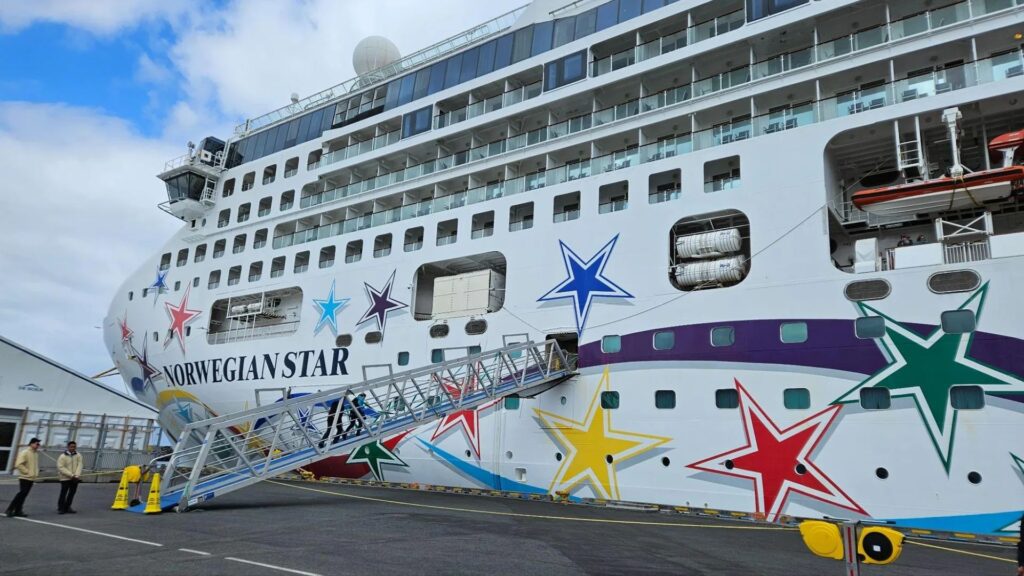
In an unexpected turn of events, the Norwegian Star’s latest cruise to Iceland was briefly interrupted on July 12, 2025, when the ship suffered a technical propulsion failure shortly after departing from New York City.
The 91,740-ton vessel, carrying 2,348 passengers, had only just begun its 14-night Transatlantic voyage when it encountered a serious issue that caused the ship to lose power, leaving it without air conditioning, running water, or thrust.
Quick Action Ensures Minimal Impact
Within hours of the ship leaving Manhattan Cruise Terminal at 4:00 p.m., the Norwegian Star found itself drifting in the Hudson River. However, thanks to the quick response of the crew and the timely assistance of two tugboats, the situation was swiftly brought under control. The ship was towed back to Pier 88 for repairs, and after a thorough inspection, the issue was identified and resolved by the time the ship returned to port.
A statement from Norwegian Cruise Line (NCL) explained: “On July 12, 2025, the ship departed New York City at its scheduled departure time of 4:00 p.m. As a result of a technical propulsion issue, the captain made the decision to return to the port with the assistance from two tugboats. After further inspection, the issue was quickly resolved by the time the ship returned to port.”
By 12:30 a.m. on Sunday, July 13, the Norwegian Star resumed its journey, and its itinerary, including its first port of call in Halifax, Nova Scotia, proceeded as planned on July 14.
Propulsion Issues Not New for Norwegian Star
While this latest failure raised some concerns, it’s not the first time Norwegian Star has dealt with propulsion issues. The vessel, which first launched in 2001, has had previous propulsion-related problems dating back to 2003, and these issues have continued sporadically over the years.
The ship’s Azipod propulsion system, a technology used on several Norwegian Cruise Line ships, has been the subject of many of these past challenges. However, the cause of the most recent failure has not yet been disclosed, and it is unclear if the Azipod system played a role.
Despite this rocky start, cruise tracking data indicates that the Norwegian Star is sailing normally and staying on schedule. The ship is expected to visit several ports of call in Canada and Greenland, including Sydney and Prince Edward Island, before heading to Iceland, where it will conclude the voyage in Reykjavik on July 26.
Rising Concerns Over Power Outages
The incident comes amid a summer marked by several notable power outages on cruise ships. In June, the MSC Orchestra suffered a power failure after a small fire, and Celebrity Infinity was stranded for days in Kusadasi, Turkey, due to a similar issue.
Though such failures remain rare, these events, coupled with the popularity of cruise-related documentaries like Netflix’s Trainwreck (which revisited the infamous “Poop Cruise” aboard Carnival Triumph), have raised concerns among some passengers.
Experts, however, stress that major power failures are uncommon and that modern cruise ships are well-equipped to handle such disruptions.
Backup generators, advanced diagnostics, and trained engineers are all standard features on board, ensuring that any emergency repairs can be completed swiftly. Ships are also equipped with satellite communication and Starlink internet, keeping them in constant contact with shore teams and emergency services.
A Smooth Continuation
Although the Norwegian Star’s journey was temporarily disrupted, the swift and effective handling of the situation ensured that there was no significant impact on the overall itinerary.
Passengers on board have since continued their adventure, exploring the sights of Halifax and gearing up for their visits to Greenland and Iceland. For those aboard, the initial hiccup was merely a minor detour in what is shaping up to be a memorable cruise experience.
As Norwegian Star continues its voyage, it serves as a reminder of how far the cruise industry has come in terms of safety and emergency preparedness, ensuring that even the most unexpected incidents are dealt with swiftly and efficiently.