Florida Passes Bill That Could Stop New Cruise Port Near Tampa Bay
A coastal resiliency bill that could significantly impact plans for a proposed cruise port near Tampa Bay has advanced in the Florida House after receiving unanimous support from lawmakers.
The legislation, which includes protections for the Terra Ceia Aquatic Preserve, passed the Florida House on March 9, 2026, with a 109–0 vote. The bill, known as Senate Bill 302, now heads to Governor Ron DeSantis’ desk and is expected to take effect on July 1, 2026, if signed into law.
Supporters say the measure is aimed at protecting one of the most environmentally sensitive areas along Florida’s Gulf Coast, while critics of the proposed port say it could prevent large-scale cruise development in the region.
Bill Aims to Protect Terra Ceia Aquatic Preserve
One of the main focuses of the legislation is limiting dredging and other major construction activities within the Terra Ceia Aquatic Preserve, a roughly 2,000-acre protected area located in Tampa Bay.
The preserve includes mangrove forests and both freshwater and saltwater ecosystems that support a wide range of marine wildlife. Environmental advocates have long warned that large-scale dredging projects could damage habitats and alter the natural tidal flow in the region.
Under the new legislation, the Board of Trustees of the Internal Improvement Trust Fund would be prohibited from approving dredging or filling of submerged lands in the preserve unless it meets specific criteria.
Permitted dredging activities would generally be limited to projects that improve human health, remove stagnant water, or support environmental restoration efforts.
Any approved work would also need to ensure it does not harm water quality or damage marine habitats within the preserve.
Proposed Tampa Bay Cruise Port Faces New Obstacles
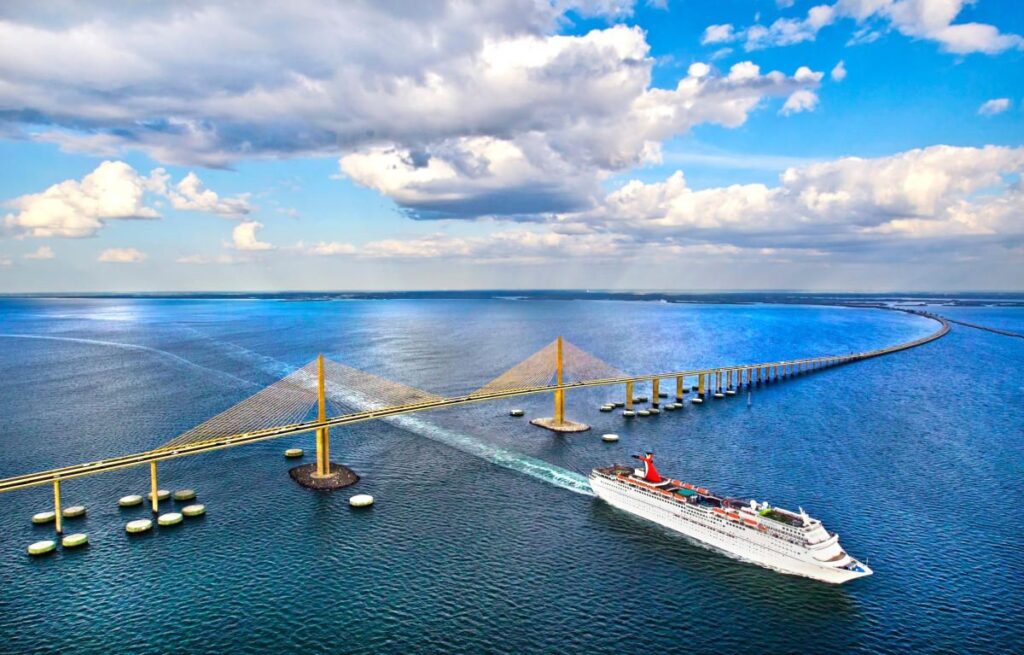
The legislation is widely seen as a major hurdle for plans to build a new cruise port in Manatee County.
Private developers have been exploring the possibility of building a multi-berth cruise terminal on approximately 328 acres known as the Knott-Cowen tract on Terra Ceia Island. The project has been pitched as a way to allow larger mega cruise ships to operate out of Tampa Bay for the first time.
However, the project would likely require extensive dredging to deepen nearby waters. Large cruise ships typically need between 25 and 50 feet of water beneath them to dock safely.
The new restrictions could make it significantly harder for developers to meet the environmental requirements needed to move the project forward.
The development proposal has also included plans to purchase Rattlesnake Key, a nearby 710-acre island that sits adjacent to the proposed port site.
Lawmakers Cite Environmental Concerns
Supporters of the bill say the legislation is necessary to protect the coastline and prevent development in an area they consider environmentally irreplaceable.
State Senator Jim Boyd, who introduced an amendment tied to the measure, said protecting the coastline around Terra Ceia Island was a key goal of the legislation.
“We had to do something to protect that part of the coastline,” Boyd said. “My goal has been from the start and still is to protect that pristine coastline of Tampa Bay and our community.”
Republican Representative Will Robinson also voiced strong support for the bill, calling the preserve one of Florida’s most important environmental areas.
“It is one of the most pristine areas in our state, and we don’t need mega cruise ships in this area,” Robinson said during discussion of the legislation.
Statewide Coastal Resiliency Standards Planned
Beyond restrictions tied to Terra Ceia, the legislation also calls for broader coastal resiliency measures across Florida.
The Florida Department of Environmental Protection (DEP) will be required to develop guidelines and standards for nature-based coastal protection methods. These rules would help create a statewide permitting process for coastal resiliency projects.
The agency must establish these standards and adopt rules, subject to legislative ratification, by a specified deadline.
The bill also includes provisions allowing certain shoreline improvements, dredging activities, and structural work within other aquatic preserves, including Biscayne Bay, under defined conditions.
Public Opposition to the Port Continues to Grow
Opposition to the proposed cruise port has also been building among local residents and environmental advocates.
A petition on Change.org aimed at stopping the project had reached nearly 20,000 signatures as of March 9, 2026. When the petition first gained attention earlier in the year, it had only around 6,000 signatures.
Some residents argue that nearby areas, including Rattlesnake Key, should remain permanently protected rather than being used as mitigation land for development.
“The Rattlesnake Key should not be mitigation land. It should be preserved forever,” said George Smith, a resident of Manatee County.
Future of the Project Remains Unclear
While the legislation does not explicitly ban a cruise port in the area, it introduces stricter environmental requirements that could complicate development plans.
Developers behind the proposed project have previously said they were still in a research and fact-finding phase and would evaluate environmental and regulatory considerations before making a final decision.
They have not publicly commented on the project since the bill passed the Florida House.
If Governor DeSantis signs the measure into law, the new restrictions will take effect July 1, 2026, potentially reshaping the future of cruise development in the Tampa Bay region.