Everything You Need to Know About the 80,000-Passenger Nuclear Floating City Going Viral Right Now
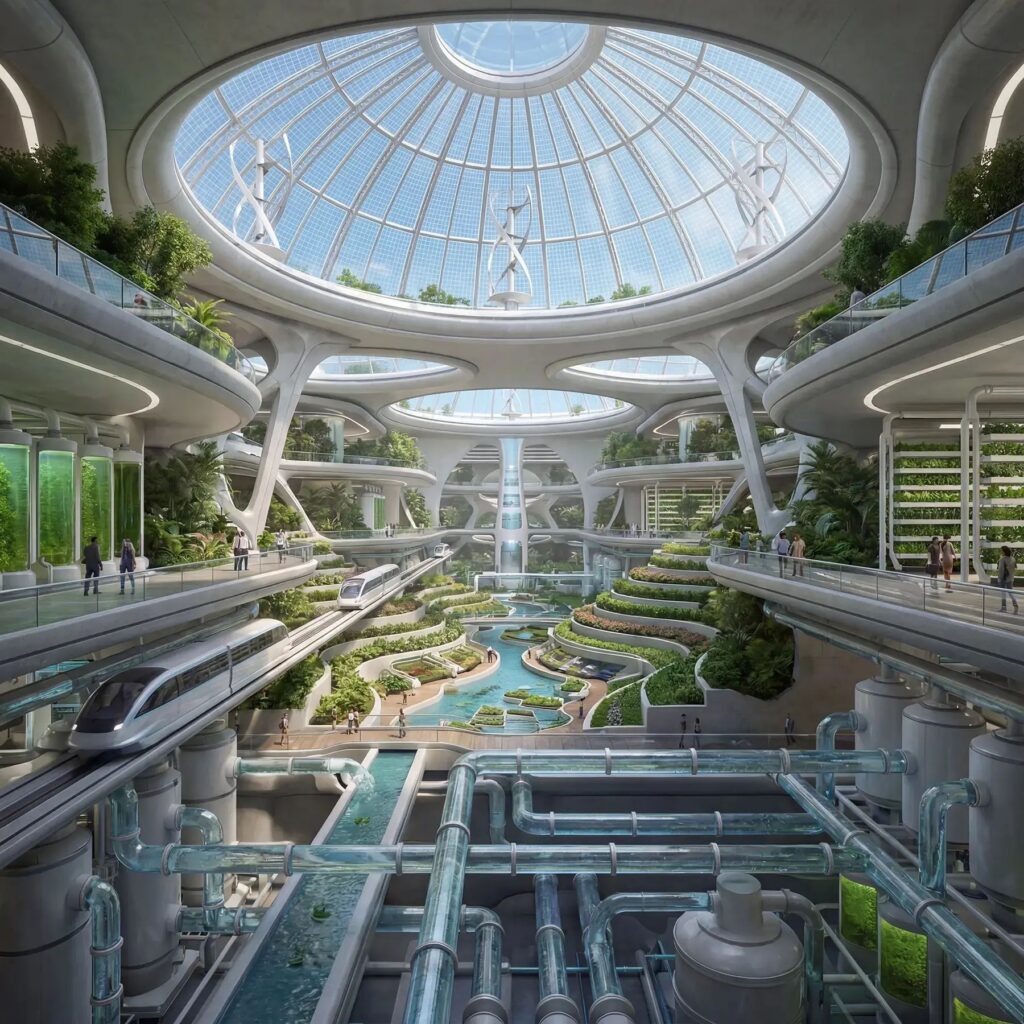
A ship nearly a mile long. Powered by nuclear energy. Carrying 80,000 people. Home to a 15,000-seat sports stadium, a full school district, an airport runway on the top deck, and a light rail system just to get from one end to the other.
This week, images and renderings of something called the Freedom Ship have been circulating across social media at remarkable speed — and for good reason. The concept is so extraordinary that the first instinct of almost everyone who sees it is to ask the same question: is this actually real?
The honest answer is: it’s a real concept, with real developers, real blueprints, and real renderings. Whether it ever becomes a real ship is a very different question.
What Is the Freedom Ship?
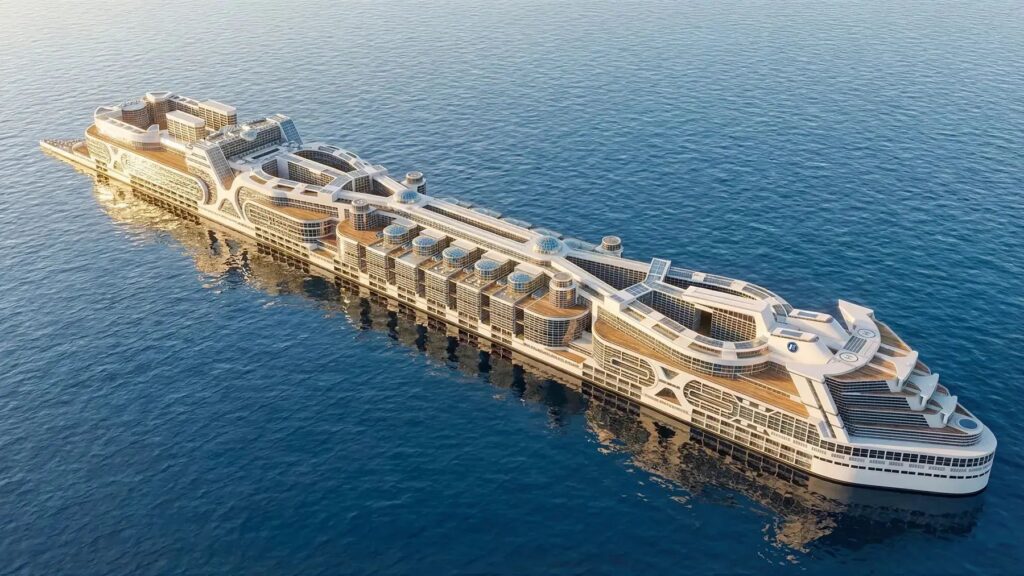
The Freedom Ship is not a cruise ship. Its developers are emphatic about that distinction. It is better described as a permanently mobile city — a self-contained urban environment built on a massive flat-bottomed steel platform that would continuously circumnavigate the globe, anchoring offshore near major coastal cities to allow residents and visitors to reach the mainland by ferry or aircraft.
The concept itself is not new. A Florida engineer named Norman Nixon first introduced it roughly 30 years ago, in the 1990s. The 2008 financial crisis effectively ended that first attempt. Nixon died in 2012, and the project went dormant.
Now it has resurfaced, driven by new technological advances in nuclear power and modular engineering — and by a man named Roger Gooch, who has taken on the role of CEO of Freedom Cruise Line International and is currently seeking the substantial capitalization required to turn an extraordinary set of blueprints into something that floats.
“We feel very confident that we can put this together,” Gooch told The Telegraph, “but capitalization is key.”
What Would Be on Board
The scale of what is being proposed requires a moment to absorb.
The vessel would stretch approximately 4,500 feet — nearly a mile from end to end. At 80,000 people, it would be home to roughly 50,000 permanent residents and 10,000 rotating tourists, all served by a crew of around 20,000.
The residential component alone includes 17,000 separate living units ranging from compact 300-square-foot condos to multi-million dollar luxury suites, alongside 10,000 hotel rooms for visitors. Because families would live here permanently — not just vacation here — the design incorporates a full K-12 school system and a college campus.
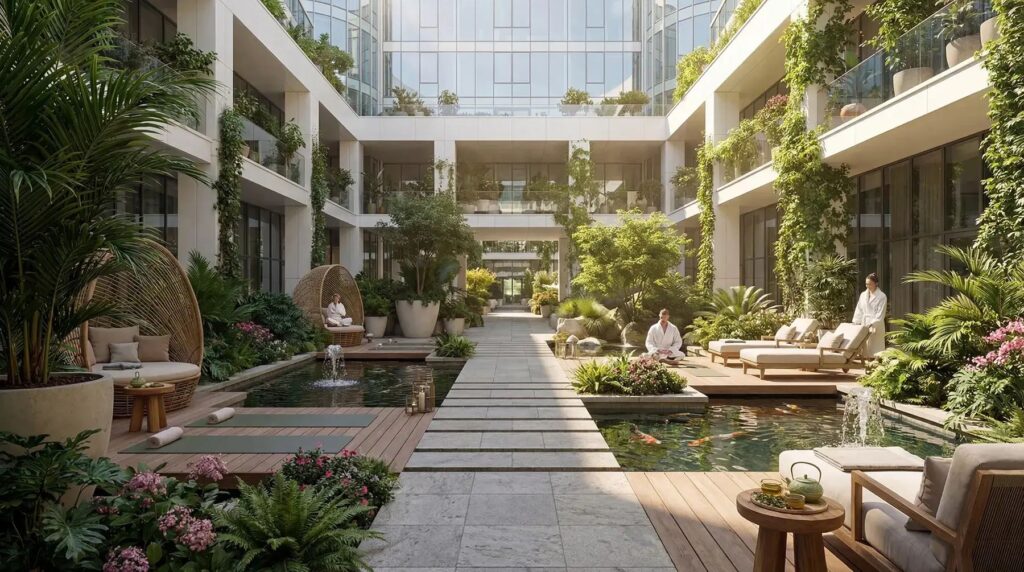
The commercial infrastructure reads like a mid-sized city: a massive multi-story shopping mall, 3,000 units for independent businesses, a major medical center, a two-story food hall, banks, nightclubs, and a 15,000-seat sports stadium. Entertainment options include a world-class concert hall, multiple movie theaters, a sprawling casino, a water park, an aquarium, and over 100 acres of outdoor open space including parks and bicycle paths.
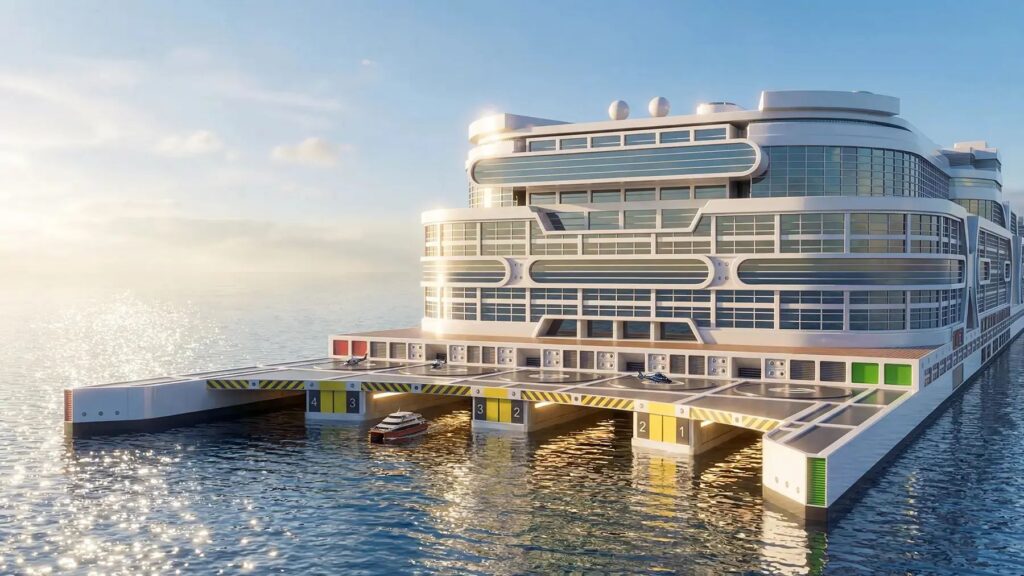
Getting around the vessel requires its own transit system — a light rail running the length of the ship. The top deck is designed as a flat runway capable of hosting small commercial turboprop aircraft, allowing residents to fly to and from the mainland directly from the ship.
Eight helipads are also planned.
The ship would be too large to dock at any existing port on the planet and would remain permanently in international waters, circling the globe once every two to three years.
The Nuclear Question
A vessel of this scale requires an almost unimaginable amount of energy. Traditional fuel sources are neither practical nor environmentally viable at this scale.
The solution the developers have landed on is Molten Salt Reactor technology — a form of nuclear propulsion that differs significantly from the high-pressure nuclear systems most people associate with the word “nuclear.” MSRs operate at low pressure, eliminating the risk of an explosive steam blowout. In a worst-case scenario where all power is lost, a physical plug melts and the liquid fuel drains automatically into a secure underground containment structure, where it cools into a stable solid block.
With this technology, the Freedom Ship could theoretically generate its own electricity, desalinate its own drinking water, and travel continuously for up to 15 years without needing to refuel at any port.
The Tax Philosophy Behind It
The Freedom Ship’s appeal is not purely about lifestyle — there is a significant economic philosophy underpinning the entire concept.
Because the vessel is designed to remain permanently in international waters rather than ever docking in any nation’s territorial jurisdiction, developers pitch it as a community entirely free from local property taxes, real estate taxes, sales taxes, and import duties. Residents are not passengers in any conventional sense. Their homes, workplaces, schools, and healthcare are all integrated into a single platform designed to function as a genuine community rather than a temporary vacation experience.
“Residents are not passengers,” the developers state. “Homes, workplaces, education, healthcare, commerce, and public spaces are integrated into a single platform designed to function continuously over time.”
The Reality Check
Now for the part that tempers the excitement.
The estimated construction cost sits somewhere between $10 billion and $16 billion. Standard shipbuilding techniques cannot handle a hull of this size — the structural stress that ocean waves would place on a 4,500-foot platform is a challenge for which no existing shipyard has a proven solution. Building the Freedom Ship would require essentially inventing a new way to build a ship before the ship itself could be built.
The nuclear propulsion technology, while real and increasingly viable, still requires regulatory approval in every nation whose waters the vessel would approach — a geopolitical challenge of considerable complexity.
Roger Gooch and his team are genuinely pursuing this. The renderings are real. The blueprints exist. The concept has found new momentum. But significant capitalization is still being sought, and the engineering challenges that need to be solved before a single piece of steel is cut remain formidable.
In the cruise industry, though, as one observer noted — a 7,000-passenger ship seemed impossible not long ago. In this business, never say never.